Generative AI tools are now a routine feature of marketing, advertising, and communications workflows. When deployed thoughtfully, these tools have a variety of benefits: reduced costs, accelerated production timelines, and…
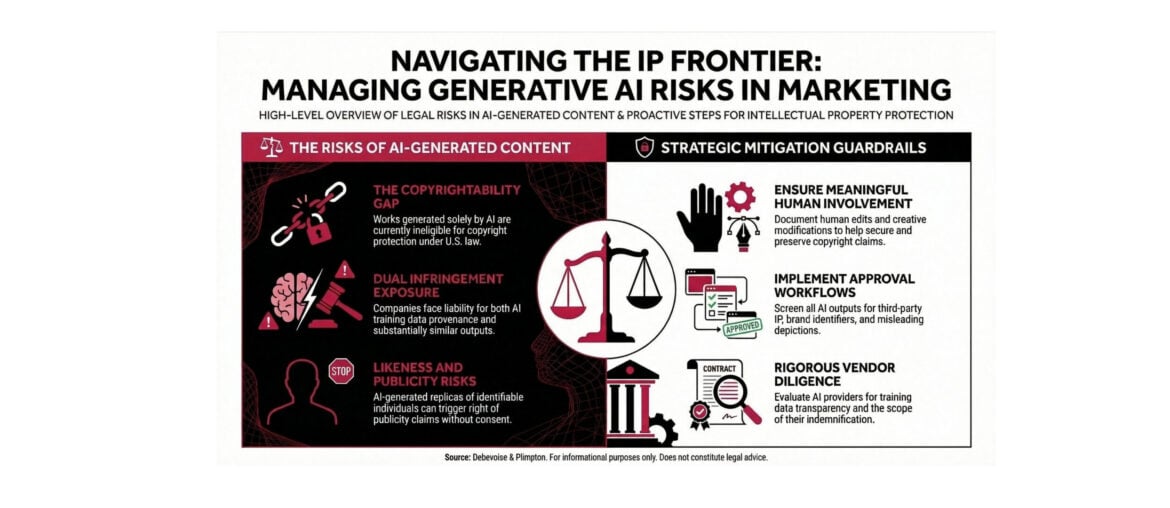

Generative AI tools are now a routine feature of marketing, advertising, and communications workflows. When deployed thoughtfully, these tools have a variety of benefits: reduced costs, accelerated production timelines, and…
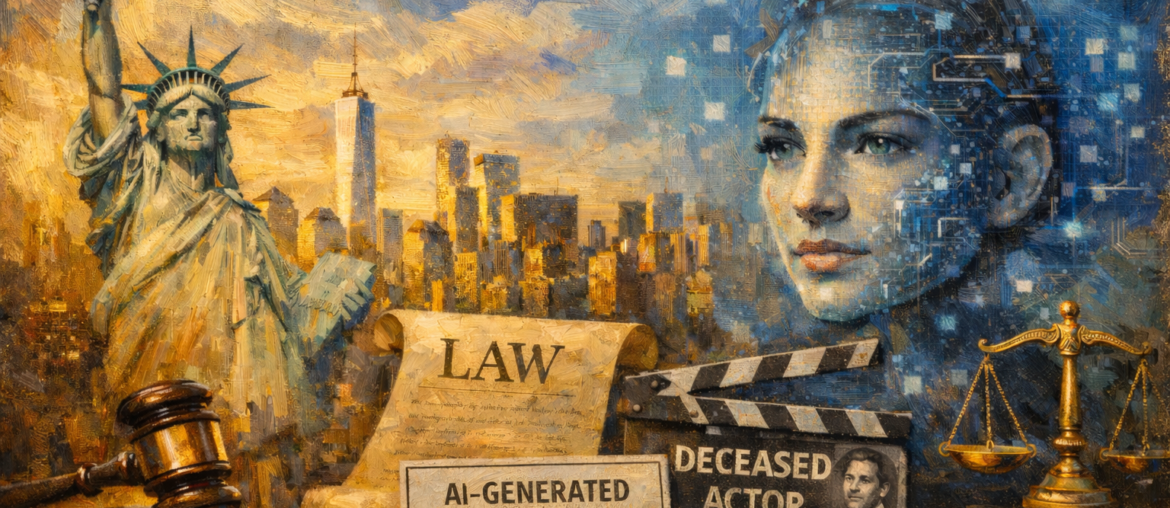
The widespread and increasing use of artificial intelligence (“AI”) in advertising and media—particularly to generate realistic human likenesses—has prompted New York to enact two new laws that carry meaningful compliance…
Whether copyrighted works can be freely used to train generative artificial intelligence (“AI”) models is at the core of dozens of lawsuits filed since AI burst onto the scene several…

There are dozens of cases pending against AI developers stemming from their use of copyrighted works to train generative AI models. In response, developers have uniformly asserted that such use…

In a ruling with potential implications for other pending generative artificial intelligence (“AI”) copyright cases, the United States District Court for the District of Delaware in Thomson Reuters Enterprise Centre…

After many rounds of motions to dismiss, intellectual property cases against AI developers are moving into the discovery phase. As we previewed in our 2024 AI year in review, one…

Introduction On December 20, 2024, the Federal Trade Commission (the “FTC”) finalized a consent agreement (“Consent Order”) with Marriott International, Inc. and its subsidiary Starwood Hotels & Resorts Worldwide LLC…
As generative AI platforms grow in sophistication, the initial era of text chatbots led by ChatGPT has evolved into a complex AI ecosystem of voice assistants and image and video…

Developers of artificial intelligence (“AI”) systems notched a victory last week when a federal judge dismissed claims under the Digital Millennium Copyright Act (“DMCA”) premised on the use of copyrighted…
Luke Dembosky, Avi Gesser, Erez Liebermann, Jim Pastore, Matt Kelly, and Johanna Skrzypczyk were all recognized by The Legal 500 US in the category Cyber Law (Including Data Privacy and Data…